There is a lack of familiarity with the concept of artificial intelligence (AI) among most people. When 1,500 senior business leaders were asking about AI in 2017, only 17 percent answers that they were familiar with it.1 Many did not understand what it was or how it would affect their companies. In spite of the fact that they understood the potential of artificial intelligence to change business processes, they were unsure of how to integrate it into their own organizations.
The Use Of Artificial Intelligence Is Transforming Every Area Of Life,
Despite its widespread lack of familiarity. In addition to integrating information, analyzing data, and analyzing the insights gained, it allows people to make better decisions. Through this comprehensive overview of AI, we hope to explain how AI is already transforming the world and raising important questions for society, the economy, and governance to an audience of policymakers, opinion leaders, and interested observers.
In This Blog,
We cover issues such as data accessibility, algorithmic bias, AI ethics, transparency, and legal liability for AI decisions, as well as novel applications in finance, national security, health care, criminal justice, transportation, and smart cities. A comparison of U.S. and European Union regulatory approaches is presents, and recommendations are made for maximizing AI benefits while protecting essential human values.
Our Recommendations For Moving Forward With AI Are As Follows:
- Researchers should have access to greater amounts of data without violating the privacy of users.
- Unclassified AI research should receive more government funding, The development of digital education and AI workforce models that will prepare employees for the 21st century.
- In order to make policy recommendations about AI, the federal government needs to form an AI advisory committee, Assist state and local officials in enacting effective policies.
- Instead of regulating specific algorithms, broad AI principles should be regulating.
- In order to prevent AI from duplicating historic injustice, unfairness, and discrimination, we need to take complaints of bias seriously.
- Ensure that human oversight and control mechanisms are maintains.
- Cybersecurity should be promotes and malicious AI behavior should be penalizes.
Artificial Intelligence Qualities:
A general definition of artificial intelligence is that it refers to “machines that respond to stimuli in a manner consistent with human responses, recognizing our ability to contemplate, judge, and intend”. According to researchers… …judgment and intention. In the opinion of researchers Shubhendu and Vijay, these software systems “make decisions that require human knowledge” and assist people in anticipating problems or resolving them when they arise. [4] Therefore, they operate with intention, intelligence, and adaptability.
Getting Professional Assistance:
The use of AI technology is also helping professional writers create content that stands out from the rest. The UK offers a wide range of professional writing services. Writing agencies such as professional writing agencies offer essay writers and Marketing assignment helpers UK.
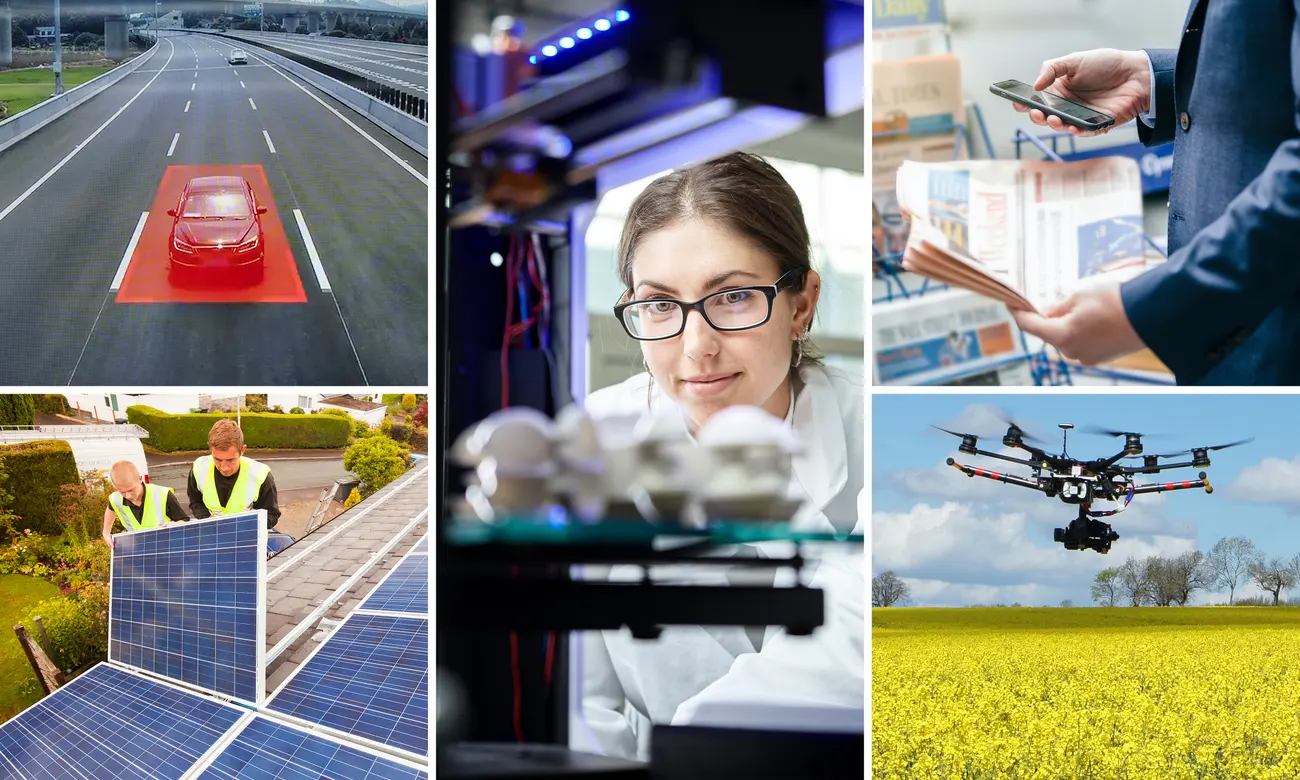
Many farmers believe artificial intelligence can enhance agriculture by monitoring weather patterns, managing pests and diseases, and even determining which crops to grow where. In order to increase productivity and profitability, many food producers are utilizing AI to collect and analyze data. Besides an automated orchard sprayer she has invested in since 2017, Ali Capper grows apples and hops at her family farm in Herefordshire and Worcestershire.
A Decade May Elapse Before A Robot Capable Of Picking,
Raspberries with the same dexterity as a human hand, picking at speed without damaging the fruit, becomes widely available. Four-armed robots are being developed for the delicate work of picking soft fruits, but robots with the dexterity of a human hand will probably not be available for a decade or more. Even so, automation has already revolutionized some of farming’s most tedious tasks, from drilling seeds to watering and spraying.
Machine learning is being embraced by media companies in order to boost subscriptions, advertise and decide what stories to promote.
Data Scientists Are Being Hired At Six-Figure Salaries By News Organizations,
To gather consumer data and guide them toward specific products, as well as provide workers with tools to automate research and writing. In order to increase subscriptions and advertising revenues, media organizations are using data analysts to create targeted content.
It Is Possible To Use AI To Predict And Identify Faults At Power Plants,
As well as to plan offshore wind farms based on weather forecasts. It is expected that retail energy suppliers will increase their use of artificial intelligence to reduce call times due to tight margins in a sector where almost 30 companies went bankrupt during the energy crisis. A chatbot asks basic questions before a human adviser speaks with a customer.
An automated chatbot is uses by companies to help customers with basic questions before they speak with a human advisor. Using AI and automation more extensively will probably result in fewer civil servants, according to former civil service head Mark Sedwill. As Blackpool council fixes potholes using AI-powered satellite images, some councils are using personal data to build computer models that help predict and intervene before abuse occurs. Despite government estimates, experts say AI is partly a catching-up issue in the financial sector, and will cost more jobs.
The Process Of Onboarding New Customers Will Become More Automated,
And AI will play a bigger role in detecting and flagging potential fraud and money laundering. Human oversight is still necessary when it comes to building and programming these systems, as well as conducting additional checks and solving more complex issues. One of the most obvious changes in supermarkets in the last five years is the increase in self-checkouts and self-scanning systems.
With labour becoming more expensive and hard to find as well as shoppers becoming more wary of staff interactions, the pandemic accelerated changes. According to McKinsey analysts, cashiers’ numbers might almost halve between 2017 and 2030 as these technologies are rolles out. A spokesperson for the industry association IGD said that self-scanning or automated tills now handle most of the UK supermarkets’ sales.
Also, non-food retailers are taking advantage of this technology due to rising labour costs. In the past few years, Uniqlo, a Japanese clothing brand, has introduced a RFID-linked system.